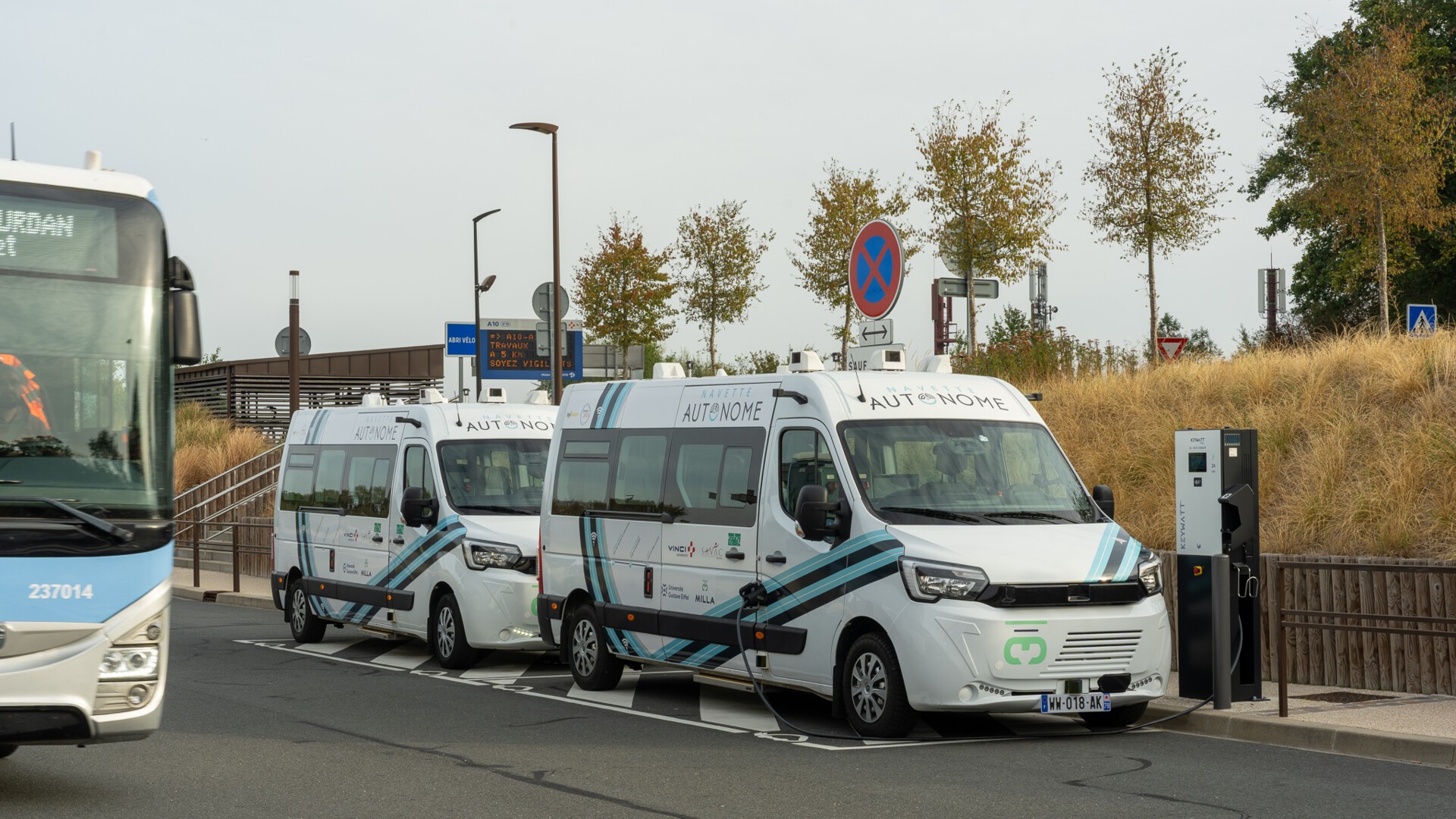
World first: electric autonomous shuttle successfully tested on the A10 motorway
- 40,000 km travelled in autonomous and electric mode by two shuttles operating since September 2025 in France between the Longvilliers multimodal hub and Massy train station.
- An innovative public transport solution, successfully tested by volunteer passengers since March 2026.
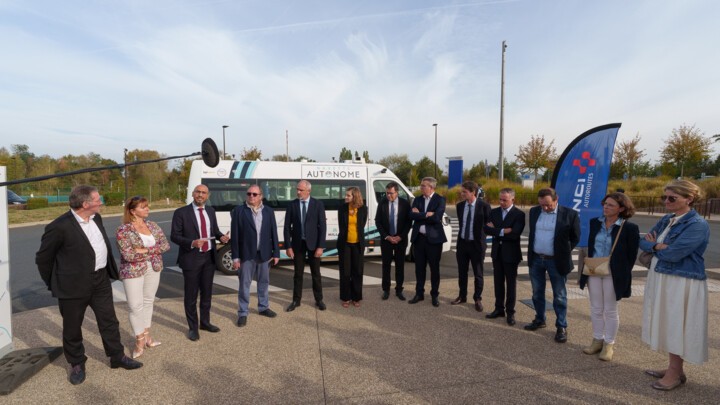
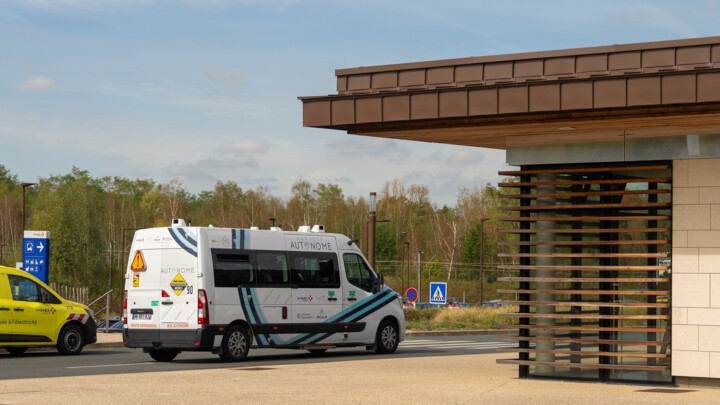
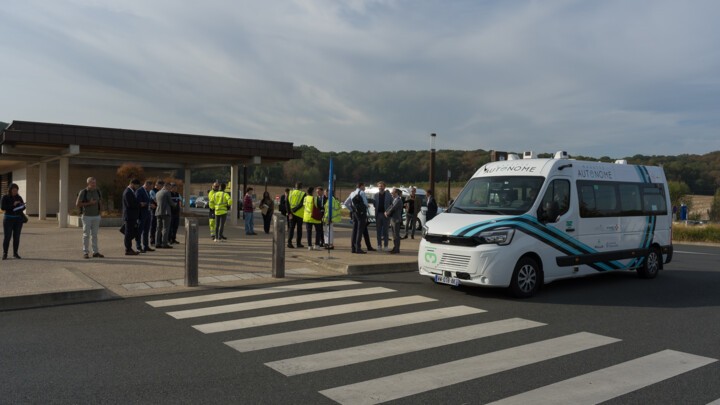
A winner of the French government’s 4th “Programme d’Investissements d’Avenir” under the France 2030 plan, the autonomous shuttle solution tested on the A10 motorway by VINCI Autoroutes, MILLA Group, SAVAC and Gustave Eiffel University has proven successful. Since September 2025, two shuttles have travelled more than 40,000 km in autonomous mode along a 30-km section south of Paris, connecting the Longvilliers multimodal hub (Yvelines), the Briis-sous-Forges motorway bus station and Massy-Palaiseau railway station (Essonne). Since March 2026, this innovative public transport solution has been tested by a panel of nearly 150 volunteer passengers, who evaluated the service under real-world traffic conditions. Surveys conducted among these first users have yielded very positive results, with a satisfaction rate of more than 87%.
This world first marks a strategic milestone towards the potential deployment of an autonomous public transport service on motorways. The results achieved over the three-year project demonstrate the solution’s reliability and acceptance, while helping identify the additional developments and funding required for large-scale deployment. Travelling at speeds of up to 90 km/h, autonomous shuttles of this type could eventually provide a new flexible mobility option to help reduce single-occupancy car use on motorways, a major source of congestion on daily commutes.
The first autonomous shuttle operating on a motorway
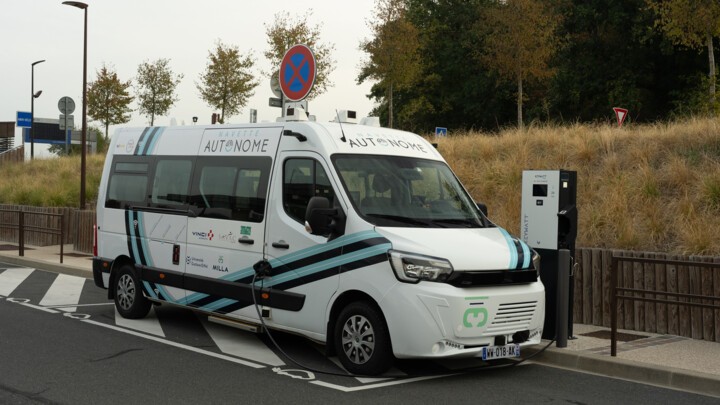
Regional express coach services, such as the one operating between the Longvilliers multimodal hub and Massy railway station, help meet passengers’ mobility needs by providing a public transport option for people who otherwise have no alternative to using a private vehicle for their daily journeys. The autonomous shuttle project deployed on the A10 motorway aims to test an alternative solution, using an automated shuttle with 12 seats and 30 trips per day, potentially providing capacity for around 360 additional passengers and helping meet growing demand.
A trial open to a panel of volunteer passengers since March 2026
Selected in 2023 as part of the French government’s 4th “Programme d’Investissements d’Avenir”, whose aim is to help shape France in the 2030s, the trial conducted between the Longvilliers multimodal hub and Massy railway station aims to validate the operational viability of an autonomous public transport service operating on a motorway.
Following an initial phase of technical development and mapping of the area to enable the shuttle to navigate its route, technical test runs began in March 2025. Over a six-month period, the shuttle regularly operated on sections of the test route, covering nearly 6,500 km.
From 15 September 2025, it then began carrying consortium employees. After travelling nearly 15,000 km in autonomous mode, two shuttles have been carrying volunteer passengers since March 2026. Recruited through a call for applications, these passengers have travelled an additional 25,000 km. Surveys conducted among these external beta testers confirm the service’s high level of acceptance, with feedback on their experience and perceptions being overwhelmingly positive.
Since the first test runs, all journeys have been conducted with a safety operator on board, ready to intervene in an emergency. The ultimate goal is for the shuttle to operate without an onboard operator, under the supervision of a remote operator.
A world first led by four French organisations
The autonomous shuttle project deployed on a section of the A10 motorway incorporates several innovative technological and service components, paving the way for an autonomous public transport solution combining:
- an automated system operating on motorways at speeds of up to 90 km/h;
- a robust supervision and on-site intervention platform;
- connected and secure infrastructure to assist the automated vehicle in navigating specific motorway situations, such as toll plazas, motorway entrances and access to bus stops, roadworks and incidents;
- an innovative public transport service:
- complementing an existing express coach service on a 28-km route between the Longvilliers multimodal hub and Massy RER station, with an intermediate stop at the Briis-sous-Forges motorway bus station;
- providing additional capacity during peak hours and enabling frequencies to be doubled during off-peak periods. This flexible operating model helps manage peak passenger flows and increase the number of daily users of the motorway public transport service.
To deliver the project, a consortium was established, bringing together the expertise of four partners:
- VINCI Autoroutes, the motorway concession operator responsible for this section of the A10, which has deployed roadside sensing capabilities and a connected software platform to assist the automated shuttles;
- MILLA GROUP, a manufacturer of automated electric shuttles, which is developing the automated shuttle and service supervision solution;
- SAVAC, a passenger transport company, which operates the automated shuttle service;
- Gustave Eiffel University, recognised for its expertise in mobility, infrastructure and transport, which assesses the impacts of the automated mobility system and its contribution to the common good.