
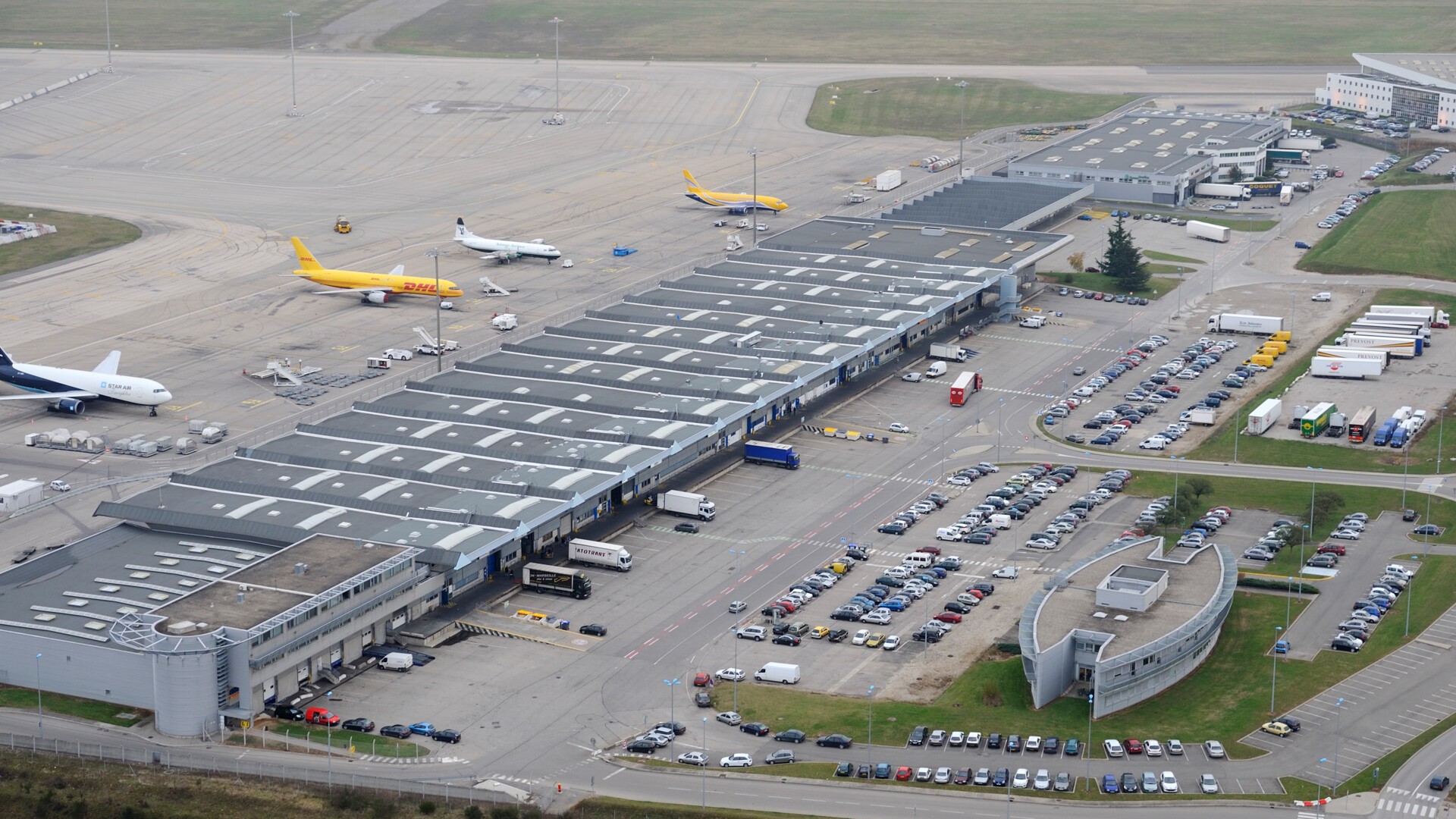
From air freight to road transport, VINCI Concessions’ infrastructure network plays a key role in logistics chains
Freight transport relies on complementary infrastructure to ensure the efficient movement of goods by both air and road. Through its airport and motorway activities, operated notably by VINCI Airports, VINCI Autoroutes and VINCI Highways, VINCI Concessions helps keep these flows moving, supporting economic exchanges and the regions it serves.
Airport infrastructure designed to support freight growth
Within VINCI Concessions, VINCI Airports contributes to the development of airport platforms capable of supporting the growth and transformation of air freight. Cargo infrastructure is evolving to increase capacity and efficiency while meeting the needs of the regions they serve, particularly when it comes to handling goods with specific requirements.
At Lyon-Saint Exupéry airport, the inauguration of Aéroport de Lyon DC1 marks a new milestone in the development of cargo operations. Covering 25,313 sq. m, this facility, developed at the heart of the CargoPort area and directly connected to the runways, enables Worldwide Flight Services (WFS) to bring all its Lyon operations together on a single site. It includes 4,400 sq. m of temperature-controlled storage facilities, supporting the handling of goods requiring specific temperature conditions and meeting the needs of sectors such as healthcare, pharmaceuticals, biotechnology and perishable goods.
In the Caribbean, Aerodom, which operates six airports in the Dominican Republic, recorded a new monthly air freight record in July, handling 10,972 tonnes of cargo, up 3.5% compared with July 2025. This growth is driven in particular by e-commerce and express courier services. Las Américas International airport handles around 75% of the country's air freight, confirming its central role in the Dominican Republic's trade flows.
At Kansai International airport in Japan, the Cargo Next project is also helping address the changing needs of the sector. Kansai Airports is working with Japanese customs authorities and the various stakeholders across the logistics chain to strengthen international cargo handling capacity and improve operational efficiency.
Road networks ensuring the continuity of freight flows
Air freight is one link in logistics chains that also rely on land-based connections. Road networks therefore play a key role in transporting goods and keeping trade flows moving.
In Brazil, Entrevias and Via Cristais, part of the VINCI Highways network, operate two strategic routes for freight transport. Entrevias crosses a major agricultural region, where the motorway network plays an essential role in transporting agricultural produce. Via Cristais, meanwhile, serves areas shaped by mining and industrial activities, while providing connections to routes leading to ports, which are essential for exporting goods.
To support the movement of heavy goods vehicles along these strategic routes, both concessions are deploying Weigh-in-Motion (WIM) systems. Already operational on Entrevias, this technology is currently being rolled out on Via Cristais. It enables trucks to be weighed while in motion, helping improve freight transport safety and preserve road infrastructure.
In France, VINCI Autoroutes is also supporting the transformation of road freight transport through the deployment of new charging infrastructure for electric heavy goods vehicles.
In Vierzon, at the junction of the A20, A71 and A85 motorways, Voltix, a subsidiary of VINCI Concessions, inaugurated a charging station dedicated to long-distance transport in early October. Its four 1.5 MW charging points enable heavy goods vehicles to recharge in 30 to 45 minutes, with plans to increase their number to eight in the future. This infrastructure supports the evolution of transport practices along a strategic corridor for road freight flows.
Supporting logistics chains for the long term
From air freight to road transport, mobility infrastructure forms a network of complementary links in logistics chains. Its development and adaptation address key challenges related to capacity, operational performance and the changing needs of transport.
Through its airport and motorway activities, VINCI Concessions supports these transformations over the long term, working alongside operators, businesses and the regions served by its infrastructure.
